
In the early centuries of the Christian era, different attitudes towards sexuality emerged in gnostic and orthodox circles, opening a great gulf between them over what it meant to be a Christian. The orthodox community began to accept the domination of men over women as divinely ordained in social life, family life and in the churches. Orthodox churches accepted as genuine the pseudo-Pauline letters of Timothy, Colossians and Ephesians, where “Paul” insists women are to keep silent in the churches and to remain obedient and submissive to their husbands. In the orthodox gospels, the Saviour ordains Peter to commence an unbroken line of apostolic succession. Jesus says, “upon this rock (Peter) I will build my church”; but in the gnostic gospels of Phillip and Mary Magdelene, any successor would surely have been Mary Magdelene and not Peter; for it was Mary Magdelene who was Jesus’ most intimate companion, one who received from him special teachings. The rest of the disciples, especially Peter, were deeply offended. The Gospel of Phillip reveals the rivalry between the male disciples and Mary Magdelene.
“— the companion of the Saviour is Mary Magdelene. But Christ loved her more than all the disciples and used to kiss her often on her mouth” ; and herein lies, in symbolic terms, the basis of gnostic spirituality, arising as it does from joy, passion, romance, ecstasy, celebration, love and intimacy – the lifeforce itself. In such a setting, doctrinal correctness and obedience to authority cannot inspire or command loyalty. This is why authoritarian structures go to such great lengths to suppress the divine feminine.
For the early orthodox Christian Church, true believers were identified by external criteria, first and foremost – acceptance of Church authority and doctrine. For gnostics, however, Christians were identified by an ecstatic union with the Divine, for which romantic love is but a metaphor. By embarking on the inner journey in solitude, we are introduced to all the world in an amazing correspondence of experience as though each individual, on his own, has tapped the same vast reservoir of gnosis.
George Orwell’s classic work, 1984, reveals the antipathy of all authoritarian structures to the notion of romantic love, which was outlawed in the fictional Oceania where Winston and Julia must conceal their romance, meeting only in secret.
But they were caught and found guilty of “sexcrimes”, which in Newspeak meant the sex act performed with love and passion. The only authorized version was “goodsex”, which meant sex for reproduction only, with no pleasure. After their torture, the lovers could meet openly because they no longer had feelings for each other. They freely discuss their “sexcrimes”, “thought crimes”, and other “treacheries.” No need for the Party to keep them apart any longer. As for Winston, the war with Eurasia was now his main concern. No place at all for his own dreams, like falling in love or fleeing to the country.
This ecstatic union of souls is depicted in the music and poetry of the medieval troubadours. These worshippers of love touched the depths of the collective psyche. The word “troubadour” was derived from the French trovere which meant “to compose” but also “to invent” or “find.” Any instructor of art would want his student, as soon as possible, to sing his own song or write his own poem. The empire, however, does not react well to individual expression.
Mythologist Joseph Campbell writes, “Love was a divine visitation, and that’s why it was superior to marriage. That was the troubadour idea.” Society seeks to manage passion within certain bounds to serve societal purposes, a stabilizing influence with the man as head of the household, his wife and children under control, a microcosm of the empire itself. But true romantic love cannot be managed or contained.
To further emphasize the schism, Sophia, the goddess of wisdom, is central to gnostic mythology, but in the orthodox community, the divine feminine existed only as a weak and watered-down version of both gnostic and pagan mythologies.
According to gnostic myth, Sophia, goddess of wisdom, strays far from the Pleroma (the fullness of God), but without Divine sanction and in the absence of her male consort, the Christ. Sophia cannot help but create, so in her great distress, she gives birth to a flawed, lesser deity, called Yaldabaoth (demiurge), who with the divine light received from his mother, creates material reality, an imperfect refection of the higher realms. Both Sophia and human beings are now trapped in the false reality of the demiurge and his Archons (rulers). Sophia herself is embodied in the living earth but the flawed nature of the demiurge is also woven into the fabric of creation. Sophia repents and God takes pity on her by tricking the demiurge to breathing Sophia’s light into the human creation.
His mother’s divine power left Yaldabaoth. It entered the psychic human body. Yaldabaoth’s demonic forces envied the man. They had given their power to him. His understanding was far greater than that of those who had created him. And greater than that of the chief ruler himself.
(The Secret Book of John, Stevan Davies translation, pages 105-107)
Human beings now have the pivotal role in Sophia’s restoration. 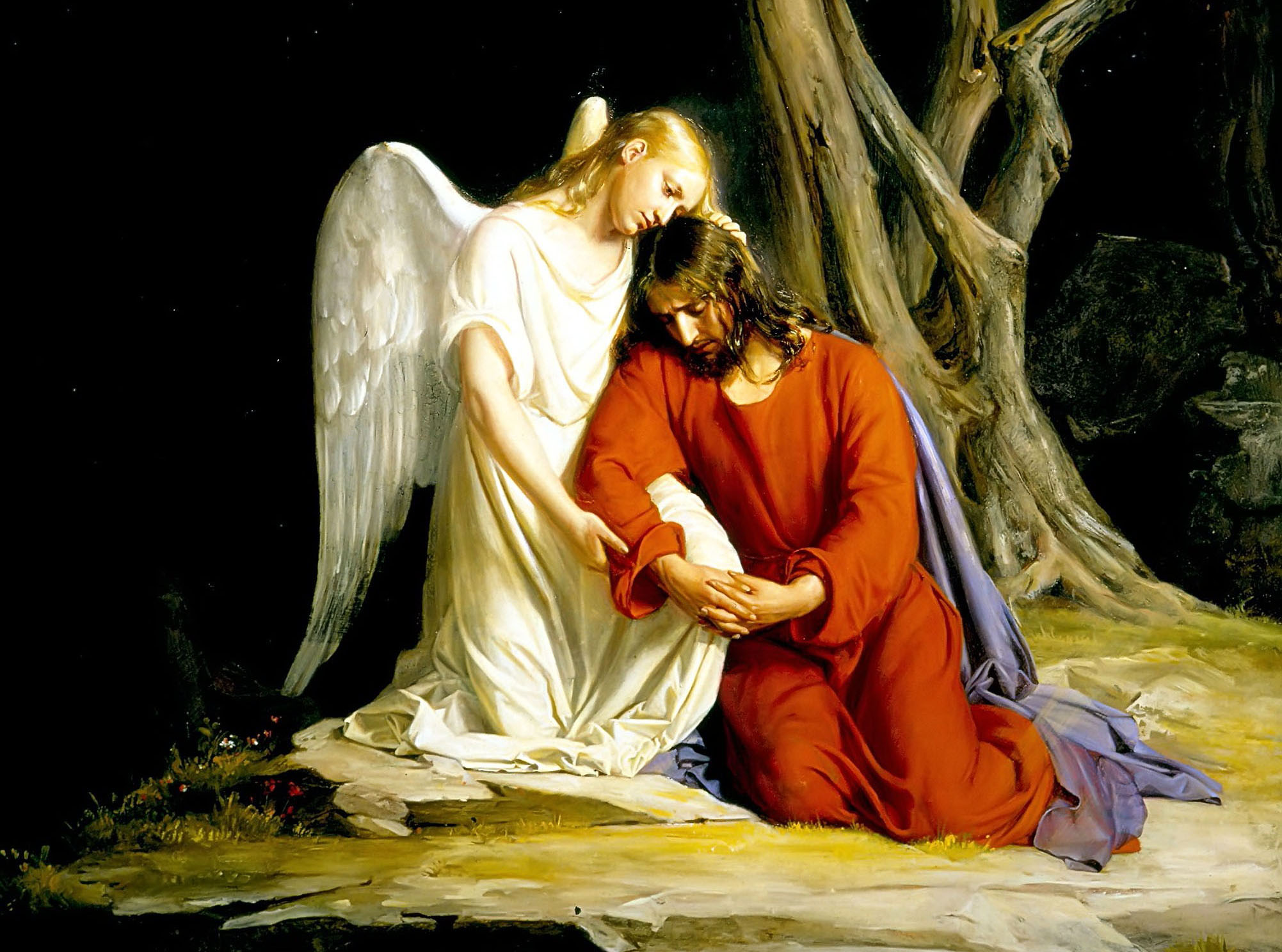
Gnostic scholar, Dr Joanna Kujawa (visit Recommended Viewing/Reading) encourages restoration of the divine feminine as essential to escaping the false reality of the demiurge. Mary Magdelene is yet another version of Sophia, as are the ancient goddesses, Inanna, Isis, Ishtar and Persephone. According to Dr Kujawa, all these goddesses are portals between life and death, ignorance and gnosis. We see, for example, Mary Magdelene present at the tomb of Jesus, co-incident with his resurrection. The feminine is our portal into this world and our portal between this world and the next. Sophia is the goddess of resurrection which, metaphorically, includes the transformation of consciousness while we are alive. That transformation takes place through an expansion of consciousness, not possible when operating with the left-brained, male-dominated, linear mind alone. The linear mind is perfect at organizing life on the material plane – building hierarchies, empires, bridges, spaceships; crucial to the work of police detectives, paramedics, plane crash investigators and when arguing in court. But it can be inflexible, fear-based, contracted, limited in vision, clinging to the status quo; and preferring the hard nosed “desert of the real” to the fluidity and uncertainty of the transcendent. The divine feminine, by contrast, is based on love, intuition, comfort, joy and when “perfect love casts out fear”, we are free at last from the confines of our mental prison.
A contracted fear-based consciousness perceives a world which really is not there. An expanded open consciousness will see “a new heavens and a new earth” which was always there but not perceived. It is the goddess which will cleanse the doors of our perception.
This is confirmed in the gnostic texts and reiterated by the romantic poets.
The kingdom of the Father is spread out upon the earth, but you do not see it (Gospel of Thomas)
According to the Secret Book of John, “human beings erroneously believe they are embedded in a material world when in fact they are spiritual beings, and the material world is not really there at all.”
(Stephan Davies Annotation page 106)
Likewise, the poet Wordsworth, recalls his early childhood bliss but laments the gradual loss of an elevated level of perception.
“There was a time when meadow, grove and stream the earth, and every common sight, to me did seem apparelled in celestial light, the glory and freshness of a dream”
These early childhood memories of the celestial realms are soon crowded out by the cares of this world.
“Heaven lies about us in our infancy! Shades of the prison-house begin to close upon the growing boy.”
(Ode: Intimations of Immortality from Recollections of Early Childhood By William Wordsworth)
By contrast, another of the romantics, William Blake, sees the work of the demiurge in nature.
Tyger Tyger, burning bright,
In the forests of the night;
What immortal hand or eye,
Could frame thy fearful symmetry?
What the hammer? what the chain,
In what furnace was thy brain?
What the anvil? what dread grasp,
Dare its deadly terrors clasp!
When the stars threw down their spears
And water’d heaven with their tears:
Did he smile his work to see?
Did he who made the Lamb make thee?
(The Tyger by William Blake)
Nevertheless, in The Marriage of Heaven and Hell, he also emphasizes our perceptual limitations.
“If the doors of perception were cleansed everything would appear to man as it is, Infinite. For man has closed himself up, till he sees all things thro’ narrow chinks of his cavern.”
(William Blake, The Marriage of Heaven and Hell)
This is reminiscent of Plato’s cave dwellers, sitting with their backs to the cave entrance, seeing only shadows on the wall and mistaking this for reality.
A few years ago, I had a powerful dream more significant to me now than it was then. It was one of those dreams, more real than real with an enduring impact. I am paddling my kayak along canals in what appears to be an ancient city. The water is still and calm, the canals are straight, meeting at right angles. The buildings are imposing, made of large granite blocks and tall Corinthian columns. But there are no people around and the environment feels sterile. I make a turn into one canal where the water is flowing, albeit slowly. Soon the scene changes dramatically, as I battle a raging torrent in a breathtaking natural environment. Everything around me is now alive, wild water and towering waves, forest, fields and mountains; but I am very afraid. Soon, however, I feel a strong reassurance that I cannot die, and this allows me to go with the flow. Fear turns into exhilaration as the waters form a luminous blue and white tunnel all around me. At the end of the tunnel is a bright light.
Could this have been the goddess opening a portal and providing the comfort and re-assurance to enter it? In retrospect, I think so, and this was her message – trust, allow and surrender.
(C) Adrian C. Smith 2020

 Autonomy Now: