THE STRANGE CASE OF LIEUTENANT COLONEL MICHAEL AQUINO AND THE TEMPLE OF SET

A high-ranking, respected military officer with top-secret security clearance, a  specialist in psychological warfare with a PhD in political science, a worshipper of Satan and founder of The Temple of Set, Michael Aquino was accused but never convicted of Satanic Ritual Abuse  of children (SRA).

Aquino was also a leading member of Anton LaVey’s Church of Satan but broke with LaVey  in 1975 when LaVey sold priestly offices previously awarded for attainment. Draped in black, a Hollywood version of a horned devil,  LaVey was a carnival barker, provocateur  and showman who denied any spiritual reality. Aquino, however, was more sincere.  He describes performing a ritual invoking Satan, but the Egyptian god Set showed up instead. Set told him Satan was old news, that the future was Set, and Aquino was thereby anointed high priest of a new order called the Temple of Set. Set was the Egyptian god of chaos, war and storms who murdered and dismembered his brother Osiris.

The Temple of Set was nominally “theistic Satanism” as opposed to LaVey’s “atheistic Satanism”  but Aquino’s actual perspective was vague. When Sean Stone, son of filmmaker Oliver Stone, asked Aquino if he believed that spiritual beings were real external entities or simply manifestations of our own mind, Aquino’s answer was  unclear. Predictably, Sean repeated the question. Aquino then  referred to “universal principles”, “natural law”  and manifestations of consciousness. The only unambiguous position was held by high-ranking member Nikolas Schreck. He believed these entities were entirely real and some downright dangerous and malevolent. He later abandoned Aquino’s brand of Satanism in favour of Buddhism and Gnosticism.

 In conversation with Peter Levenda, Aquino always denied the existence of anything paranormal, including ghosts, UFOs or spirits. This materialism seems at odds with his actual practice. Perhaps the stated position conceals a deeper occulted reality. Materialism is the most insidious of all religions but  designed only for the rubes, not the initiated.

What then did his actual practice include?

In one instance, it included a trip to Wewelsburg Castle, where Heinrich Himmler and other SS officers performed occult ceremonies. Aquino was attracted to the location because he considered it magically charged. He performed his own ceremony in the ritual chamber, then moved on to Hitler’s mountain retreat, the Eagle’s Nest, to pay further homage.  On national television, he proudly displayed a dagger belonging to the most senior SS officer at Wewelsburg. He does not tell us what the dagger was used for. That part is left to the imagination. 

In Vietnam, Aquino, as a psychological warfare operative, put his skills to work as part of Operation Phoenix. They used helicopters blasting blood-curdling demonic screams to frighten both civilians and combatants alike. In one instance they captured a local tax collector, murdered him, drained all his blood and left him hanging outside a village. The villagers were terrified of vampires, and this was calculated to encourage reliance on the US Army for protection. This was an application of what Aquino called “lesser black magic”, the alteration of perceptions; “greater black magic” involved the truly miraculous, the alteration of reality itself.

In 1980, he was commissioned by General Paul Vallely, board member of Turning Point USA, to write a paper on mind control. This resulted in an academic treatise  From PSYOP to MindWar: The Psychology of Victory. Henceforth, mind war would be primary, not secondary to actual combat, to be practised on both enemies and citizens alike. He acknowledges the illegality of lying to the American people but gets around this with a concept he terms, “future truth”. First you decide what narrative you want to spin, control all the means by which people process information until everyone believes it; and because everyone believes it, it becomes real. That’s next-level magic! This is the negative application of the postmodernist assertion: there’s no such thing as objective reality, no such thing as truth. Reality is something we mould and shape to our liking.

During a BBC interview, he was asked if it was OK, in his view, to put a curse on someone. He replied in the affirmative. He was then asked if he had ever  cursed anyone. Sensing a trap, there was a long pause. He never felt the need, he said,  because he was always able to influence events preventatively. An extravagant claim, I thought.

Satanism is a form of magic which comes under the general heading  “left-hand path”. It does not recognize a higher power or moral authority beyond the individual, whereas “the right-hand path” does. The right-hand path is also a magical tradition but subject to safeguards. Jesus was a magician, and prayer is a form of magic but always with a qualification, “thy will be done”.   A higher power could mean, among other things, a wiser, more evolved version of ourselves as yet unrealized, something beyond the ego to which we might turn for guidance.

Satanists reject moral authority, taboos, rules and societal norms, claiming the individual alone is god.  This could be a call to personal autonomy or a wilful refusal to tame the ego. Which rules do they want to get rid of? How about murder, for example? They could argue a moral person needs no rules but this could easily qualify as Christianity 101, so why Satanism then? Christian doctrine says if you have the law written in your heart, the law is no longer needed.  Satanism might imply such a high level of attainment that asserting  one’s own will would always be the right thing.  Satanism could manifest as wilfulness, enlisting entities to force a desired outcome. This could come with a price.

For the Satanist, Satan or Set is the ultimate rebel. If we are speaking of rebellion against religious authority, Jesus Christ could  be an equally worthy figurehead. He opposed the religious authorities of his day and the moneychangers at the Temple. Just as easily, rebellion could mean cutting yourself off from  Source consciousness and going it alone. In Gnosticism, this was Sophia’s error, a permissionless departure, creating on her own, separate from Source.

Christianity can mean different things to different people. Satanism can mean different things to different people. Saying you are a rebel tells us very little. What kind of rebel, rebelling against what? Most inmates of maximum-security prisons are rebels, so was Jesus Christ.

There are probably as many versions of Satanism as there are versions of Christianity and it’s impossible to overgeneralize.  Some argue that the god of the Old Testament  was not the ultimate God but a flawed, lesser created being, often cruel, jealous and wrathful. So, what we once thought was good might be considered bad.  Carrying this inversion further, the one rebelling against that flawed deity, Satan, once thought bad becomes symbolic of liberation. The acid test is  not so much belief as behaviour.  Watch what they do, not what they say. By their fruits you shall know them, not their labels.

One form of Satanism might seek to provoke or ridicule fundamentalist Christians, a self-defeating and unnecessary practice which, I believe, contributed to the “Satanic Panic” of the 1980s which swept across the United States and other countries. The Satanic Panic was a modern version of the Salem witch trials and the Spanish Inquisition. These events all involved serious accusations of Satanic Ritual Abuse of children attending daycare centres. Some convictions were attained on flimsy evidence, the convictions later overturned.

 It takes two to tango, however. You cannot ignite a firestorm, appear on national television in black robes, an SS ceremonial dagger in hand, then act surprised and claim victimhood when accusations come your way. Newton’s third law of motion is “for every action there is an equal and opposite reaction”.

Now comes my tentative hypothesis, an out-on-a-limb speculation. The Satanic Panic could have been a psyop, the proverbial battle of opposites, the classic divide and conquer strategy, diverting and misdirecting attention from the puppet master behind the stage and the hard truths too difficult to believe. Widespread fantasies of demons everywhere tormenting the overactive imagination should not be taken as evidence that demons do not exist. I believe that MindWar is a real thing and that Aquino’s dream of controlling all the means by which we perceive reality has been achieved. Therefore, when the media participates in stoking the hysteria of the Satanic Panic, as it did through shows like Geraldo and  The Oprah Winfrey Show, this might not be  an accident.  Hollywood was in on the act is well with a series of horror films, such as Rosemary’s Baby and The Exorcist.

If the overall effect of MindWar is to obscure and muddy the waters, discouraging serious investigation into allegations of SRA, then  we could easily conclude it has  succeeded. The whole episode damages our perception of what might be the real thing.

(c) Adrian Charles Smith 2026

New Interview with Miguel Conner (Aeon Byte)

Another great interview with Miguel Conner of Aeon Byte Gnostic Radio. How does the spiritual seeker  navigate this political turbulence and polarization? We spotlight the powers which should not be and their ultimate objective. Is this the endgame of The Fabian Society and other influential players?

“It’s the end of the world as we know it, and I’m glad Adrian Smith, author of A Prison for Your Mind, will join us to find a better world. We’ll discuss politics from a Gnostic stance. Adrian will provide many potent ideas, from the Gnosis of John Adams to the concept of Utilitarianism to the malevolence of the Fabian Society. In the end, you’ll get valuable and necessary antidotes to the various Wetikos that block your sacred mission and infect the collective human psyche. We got Yaldi Balid right where we want him.”

(c) Adrian Charles Smith 2025

Shipwrecked by Belief: A Gnostic Story

When my early life as a fundamentalist minister came to an abrupt and traumatic end, I surveyed what could be salvaged from the general shipwreck of disappointment. A few valuables could be gathered up, for sure; but that old ship would never sail again. Disappointment is an understatement. What is left to believe in when belief itself has betrayed you? We are held captive by belief (ideology, narrative, meme). Manipulation of belief is the basis of mind control, a clear pathway to dystopia.

I spent time in the corporate world. More accurately, I “did” time there. But to survive and thrive aboard the ship of commerce, one must believe without question. “True believers” embrace with total commitment, the paramount importance of production. Quotas and achievements give meaning, purpose, and a direction in life. Scientific materialism produces labour-saving machines and fascinating gadgets which do nothing for the soul. So, with the passage of time, belief falters. “We keep you alive to serve this ship,” the Roman overlord tells the galley slave. I would abandon the ship of commerce to find a new direction.

A man can only stand so much disappointment. I even thought I might become an atheist, but I couldn’t do it. Those who confidently champion scientific materialism, and deny any spiritual reality, are true believers but not true scientists. A true scientist examines the evidence on its merits without pre-conception. No need to review the evidence, they say, we already know the answer. But evidence does exist for a supernatural or paranormal reality. The scientific research of sincere parapsychologists and paranormal investigators is met with derision and ridicule. This is getting much too close to that original experience of belief which tolerates no dissent. The militant atheist has much in common with the religious fanatic.

I graduated from The University of London with a degree in law. Here I began to re-evaluate the fatal attraction of belief. Asking the right question is more important than finding the right answer. Appreciating a good argument is more realistic than an over-abundance of certitude. Adherence to core values of justice, truth and morality are the foundation of natural law. Pursuing what is right, is more important than being right.

Learn to do well; seek judgment, relieve the oppressed, defend the fatherless, plead for the widow. (Isaiah 1)

I discovered Gnosticism by a process of elimination, filtering out that which was reminiscent of my original experience of fundamentalism. Fundamentalism is a mentality, transcending any particular belief system, religious or otherwise. The devil (demiurge) is a shapeshifter. Changing a disguise does not alter the true nature of what lurks beneath the costume. On a good day, the adversary is rigid, inflexible, arrogant, intolerant, argumentative, narrow minded, and contemptuous; on a bad one, unhinged, vicious and violent. The same mental virus infecting the Christian mob which murdered Hypatia of Alexandria also infected the Jacobins of The French Revolution. They believed in extensive government intervention to effect revolutionary social change, in some ways, an early version of Marxism. Thomas Paine was arrested in Paris after he recommended mercy for the royal family. Only an intervention by Thomas Jefferson saved him from the guillotine. A different context yes but the same counterfeiting spirit.

Beliefs are toxic when held tightly. Toxic beliefs thrive on ignorance. Exposure to a wide range of ideas is an effective antidote.

Gnostics believed different things and argued amongst themselves, but that melting pot of ideas uncovered an array of possibilities which could not be known otherwise. When constantly exposed to new ideas which challenge old ones, we avoid the cult of belief. Gnostics hold beliefs lightly. Theirs is a unity of Spirit. Their gnosis (knowledge) is experiential and shamanistic. Beliefs are provisional and subject to change.

A world without belief becomes administratively unworkable. What is there to manage if people are allowed to believe what they want. Authority demands one truth, a narrowing of the imagination. Brute force is clumsy and expensive, better if the masses accept or even demand their servitude.  For this they must believe.

I have also had time to reflect upon all the false beliefs (narratives) we hold about ourselves which, quite apart from those in the world at large, also keep us locked up in a prison for the mind.

This process of calcification drove the Gnostics underground, their wisdom reduced to fragments found in pots. The Library of Alexandria was burned to the ground and with it the natural curiosity of the human mind. If you want to control the world, control the mind.

Paul of Tarsus was once a man of definite belief, a Pharisee of the Pharisees, as he described himself. Early Christians were heretics of Judaism and he participated in their persecution. Paul was later transformed, not by a new belief but by a bolt of lightning, a vision on the road to Damascus, a transformative religious experience (gnosis).

He emerges much less certain about belief.

I am determined not to know anything,

He who thinks he knows, knows nothing yet as he ought to know.

Where there is knowledge, it shall pass away.

 He speaks of that impermeant or provisional knowledge which often fails but not of gnosis, that revelatory experiential knowledge which is transformative and everlasting.

Psychologist Carl Jung, referring to gnosis, says it best: “I do not believe, I know.’

(C) Adrian Charles Smith, 2024

Divide and Conquer

Two young fish are swimming through the water when they are approached by an older fish who asks, “How’s the water this morning?” They carry on swimming, somewhat puzzled, then one fish turns to the other and says, “What the hell is water?”

Our belief systems (or what I call “fundamentalism”) are the waters within which we swim. A belief system is natural to us, so we do not observe it, neither can we imagine anything else. 

This is important because our adversary (the demiurge) uses this propensity to control us. His strategy is divide and conquer.  The adversary is a master counterfeiter, often appearing in one disguise or another. The spider frequently moves its nest. If the spider appears in the disguise of our favorite belief system, we will identify with it even though behaviour contradicts the carefully constructed narrative.

A certain emperor disguises himself as a feminist. When someone uses the word “mankind”, he corrects them and instructs the use of “people kind” instead. The people cheer! The emperor appoints as his Minister of Justice, a Native American woman, to create an appearance of furthering “equity” and “diversity”.  In the exercise of her duties, the Minister prosecutes a business favored by the emperor. He orders her to stop. Recognizing a gross violation of the nation’s constitution, the Minister refuses, so the emperor dismisses her. It seems the emperor actually dislikes strong, principled and competent women, but in order to preserve the narrative, true believers block or forget the contradictions even as they multiply.

In another time and place far removed and at the opposite end of the political spectrum, a certain president invades a country to overthrow an “evil  dictator”. In order to garner the necessary public support and to conceal the real reasons for the invasion, he tells lies about the dictator having weapons of mass destruction and of being connected to a major terrorist attack. None of this is remotely true (and no one argues differently to this day), but people are whipped up in a frenzy of patriotism and moral outrage. Even as the contradictions and inconsistencies mount, they are blocked from consciousness or ignored, and so the bloody and destructive wars continue, one after another. Few think to ask: They have lied repeatedly in the past, why should I believe them now?

This is sophisticated mind-control, and the use of contradiction is part of the game. When subliminal contradiction is accepted into the field of perception without resistance, the critical faculty is stunned, and the mind becomes receptive to suggestion.

The mental anxiety induced when people observe the lies and contradictions is called “cognitive dissonance”. Now they have a choice to make. Question their ideological commitment, or forget the inconsistencies in order to keep believing the lies.

“Winston sank … into the labyrinthine world of doublethink. To know and not to know, to be conscious of complete truthfulness while telling carefully constructed lies, to hold simultaneously two opinions which canceled out, knowing them to be contradictory and believing in both of them, to use logic against logic, to repudiate morality while laying claim to it, to believe that democracy was impossible and that the Party was the guardian of democracy, to forget, whatever it was necessary to forget, then to draw it back into memory again at the moment when it was needed, and then promptly forget it again…

George Orwell 1984

It’s easy for people on opposite sides to observe the foolish behaviour of their counterparts and not see the beam which is in their own eye. Truth telling invites ridicule and contempt. As we continue to fight each other, the spell-binding machinations of the magician go unnoticed as the hidden agenda moves forward.

That is how the divide and conquer strategy works and that is why we stand on the brink of totalitarianism and WW3 (if we are not there already).

THE END

Adrian Charles Smith (c) 2023

The Shock and Awe of Covid-19

span flu2
The Spanish Flu

It’s all coronavirus all the time in the news these days and people are afraid. When people are afraid, they might countenance measures more terrifying than the disease itself. Totalitarians never let a good crisis go to waste and this one is a giant leap forward with no clear way back. Confined to our homes, under virtual “house arrest”, we can only watch helplessly as events unfold. As I write, civil liberties are suspended and there is a virtual takeover of the economy by government. When it comes to public spending, we are oft reminded, “there’s no magic money tree”. Well, quite suddenly – we have this magic money tree. Government will bail out affected business without discrimination – the good, the bad and the ugly, whatever it takes. There will be cash for affected individuals too but as usual, the benefits for them will be inadequate. No one knows for sure what the consequences will be, except – there will be consequences. If we have this magic money tree after all, then why do we have a health care system that’s so quickly and so easily overwhelmed?

A 2016 “wargame” concluded that Britain’s National Health Service was woefully unprepared for a pandemic. The results of the test, which was suppressed by David Cameron’s conservative coalition government, cited shortages of IC beds, tests, protective equipment and ventilators. We now know that austerity kills as surely as any virus. Oxford university estimated 120,000 people lost their lives as a result of austerity in the health service imposed in the aftermath of bank bailouts. That’s more than have died from coronavirus worldwide so far. Properly prepared health services could have coped with Covid-19 and there would have been no need to deliberately engineer an economic collapse.

It will be small business which suffers most from the lockdown. It is estimated that up to one third of small businesses will not re-open. Whether it’s the disease or the cure, lives are ruined or ended prematurely by suicide or despair. There will be suicides, substance abuse, anxiety, depression, necessary doctor’s appointments missed, treatments put off and the unquantifiable damage to our sense of autonomy.

Life here on our small farm goes on much as it always has. We can go for a walk in the woods or on the marsh and we have ample supplies. But what if you live in a small apartment in a big city with four kids climbing the walls? You have just lost your job, joining ten million in the USA who have lost their jobs in the last two weeks alone; and this is only the beginning. Your relationship was strained to begin with, now it’s at the breaking point. What does this mean for the incidence of domestic abuse? What does it mean for mental health? In 2012, a landmark report from University College, published in both Britain and the USA, identified a new “killer disease”– isolation.

Lockdown is not a choice of lives vs dollars; it’s lives vs lives. How many lives will be lost from the cure? It’s now a given, we are in a self-induced recession worse than The Great Recession of 2008 and, if so, it could take up to two years to recover once the crisis ends; but if the shutdown persists much longer, we could have a depression and that could last ten years. This could mean hardship on a par with the 1930s. Could it be that we are so afraid of death, we are willing to commit suicide?

I am reminded of Naomi Klein’s bestselling book The Shock Doctrine. Shock leaves us disorientated and confused. Shock leaves us begging the authorities to apply their cure. Draconian policies are often imposed on a population in shock. Minds full of fear are blank slates highly receptive and easily persuaded. If the policy response doesn’t work, there will be more shocks. In such a state we lose the capacity to resist. Klein refers specifically to the radical free-market policies imposed on Chile under the dictatorship of Augusto Pinochet, policies inspired by the fundamentalist economic ideology of Milton Friedman of the Chicago School. The ensuing disaster was all part of the cure, Friedman argued. The radical Marxists are no better. In either case, when things don’t work as advertised, the response is the same – double down. ( As I have argued in my book, no need for a binary choice between the seemingly opposite ideologies of the political left and right; there is another way – integration.)

It’s not clear these radical anti-virus measures will work either, unless or until there’s a vaccine but that could be two years away. By that time, we will be well accustomed to dictatorship. We are warned not to let our guard down – against the disease that is. There could be a renewed outbreak, perhaps in the fall. Even when there’s a vaccine, the disease could mutate or there could be another even more deadly virus unstoppable in a globalized world. Coronavirus could well be the new normal. Acceptance of dictatorship could also be the new normal. Having been gradually conditioned to such solutions, one question remains: Is this the end game or just one more step along the way?

Given the magnitude of the crisis and the response to it, one would hope that there would be some certainty as to the numbers. If the deaths were numbered in millions, as first indicated, then the response could be justified. To put things in perspective, the World Health Organization puts the annual worldwide deaths from ordinary flu (respiratory complications only) at 290,000 to 650,000. According to John Hopkins University, the worldwide deaths from coronavirus as of this date (April 11, 2020) stand at 105,000. The Spanish Flu of 1918 killed 40-50 million.

What is the true death rate for the coronavirus vs ordinary influenza? The number of deaths is the numerator, the number of infections is the denominator. The number of deaths over the number of infections equals the death rate. Current estimates are that this flu is 10 times more deadly than ordinary flu or one person dying for every one hundred infected. The truth is, no one knows the denominator because there is no antibody test available yet. Such a test would tell us the number of people who have had the virus but have recovered, having produced an antibody affording them immunity. Such a test would greatly increase the denominator (the total number of people who have been infected). A larger denominator produces a much lower death rate. The true death rate is therefore less than the one reported (the reported number is based on incomplete information).

There are problems with the numerator also. How many people die with the infection but not from it? You can have the infection and not even know it but you die of a heart attack. The test says you died of Covid-19.

Dr. Jay Bhattacharya, MD Phd, is a professor of medicine at Stanford University. He recently wrote an article for the Wall Street Journal asking, Is The Coronavirus As Deadly As They Say? He argues that the lethality of the coronavirus is much less than advertised. He raises these issues in an interview with The Hoover Institution (included with this posting). He proposes alternatives to shutting down the entire economy.

Whatever the numbers, it’s important that we know the price we pay.

British conservative MP Steve Baker fought back tears as he labelled Britain a dystopian society following new laws passed amid the growing coronavirus pandemic.

Mr. Baker said: “We are implementing tonight in this Bill at least a dystopian society, some would call it totalitarian.”

He approved the Bill in the fervent hope that these measures would remain in force not one minute longer than necessary. It’s often the case though, that once enacted, there’s no going back. The Patriot Act, authorizing unprecedented surveillance of U.S. citizens, is still in force 20 years after 9/11. It was due to expire in 2015 but was extended by the Obama administration.

Former Cabinet Minister Ted Davis added: “Even worse is how some police forces are encouraging people to spy upon their neighbours, seemingly attempting to turn us into an informer state.”

From The Times of London April 10, 2020:

Nick Adderley, the chief constable of Northhamptonshire said, that a “three-week grace period” in the country was over, adding: “We will not, at this stage, be setting up roadblocks.”

“We will not, at this stage, start to marshal supermarkets, checking the items in baskets and trolleys to see whether it’s a legitimate, necessary item. But again, be under no illusion, if people do not heed the warnings I’m making today, we will start to do that.

And in Derbyshire, police use drones to find people walking alone on the mores. Such activities are deemed “non-essential”.

We recall with horror the prospect of being asked by police, “where are your papers”, recalling many old films depicting life under Nazi rule. Could we be that far off? Of course, it’s always in a good cause, legitimate or not.

(C) Adrian Charles Smith 2020

Globalization Re-Think

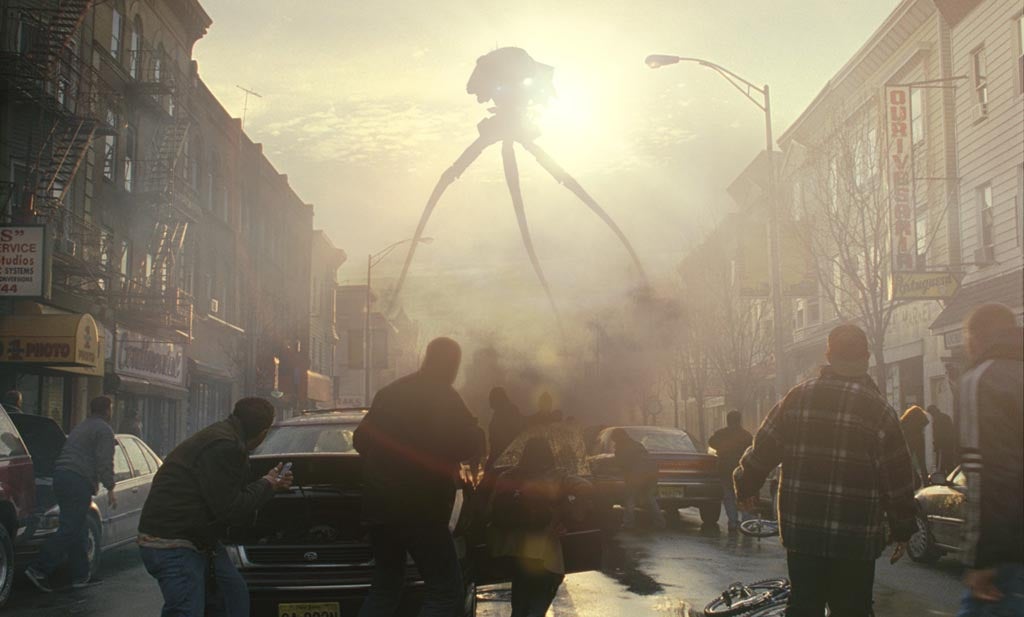
war-of-the-worlds-2005
Image: Paramount/Dreamworks

Those who have read my book will know I am no fan of globalization, or the false narratives which are used to promote it. Such narratives resemble religious doctrine which are only challenged by heretics.   By promoting ever higher levels of dependency, globalization threatens both national and individual sovereignty. It also creates huge systemic vulnerabilities. Yet, such trends seem unstoppable and irreversible. I have argued for a return to more local and national production – as close to self-sufficiency as possible. That might seem like an idealistic dream.

Yet, I am reading an increasing number of reports that the coronavirus is causing a re-think of globalization because of the interruption of complex international supply chains and the devastation this is causing to the global economy.  It was reported today in The Times of London, March 6, 2020:

The most efficient, which is to say the cheapest, way companies have found of manufacturing products is to use supply chains that straddle the globe in search of cheap labour. If something could be made for less on the other side of the world, so be it.

Yet coronavirus, which threatens to constrain the free movement of people and goods, will deny companies this cheapest avenue. Companies will have to think long and hard about whether intercontinental supply chains make sense. Already some companies are shifting production back home and opting for home-built components.

And this from Bloomberg: “Fed Did Right Thing, But It’s a Whole New Ballgame: Jim Bianco”:

“I would argue that markets are signaling that the coronavirus is causing a secular shift in thinking [by declining after the Fed rate cut announcement] … the global supply chain, especially if more shortages develop in the coming weeks, will get a rethink similar to the worst-case scenario from the trade wars. This means de-globalization and returning manufacturing processes closer to home…

This trend reversal would mean relief from grossly over-valued asset prices (urban real estate and the share values of multi-nationals).  That won’t be such a bad thing if people at home can afford to buy a house.  There will be a return of inflation (excluding real estate) but that won’t be such a bad thing since wages will rise also, as will employment in more meaningful and better quality jobs.

Penicillin is no longer manufactured in the U.S.; it comes from China, as do the components of many manufactured goods. Assembly lines at home are crippled if trade is interrupted.

I am reminded of the 2005 movie War of The Worlds, based on the novel by H.G. Wells. The “tripods” seemed unstoppable.  Missiles, planes and tanks were useless; but in the end, the aliens were defeated by a tiny microbe invisible to the naked eye.

(c) Adrian Charles Smith 2020

Brexit – The Quest for Autonomy

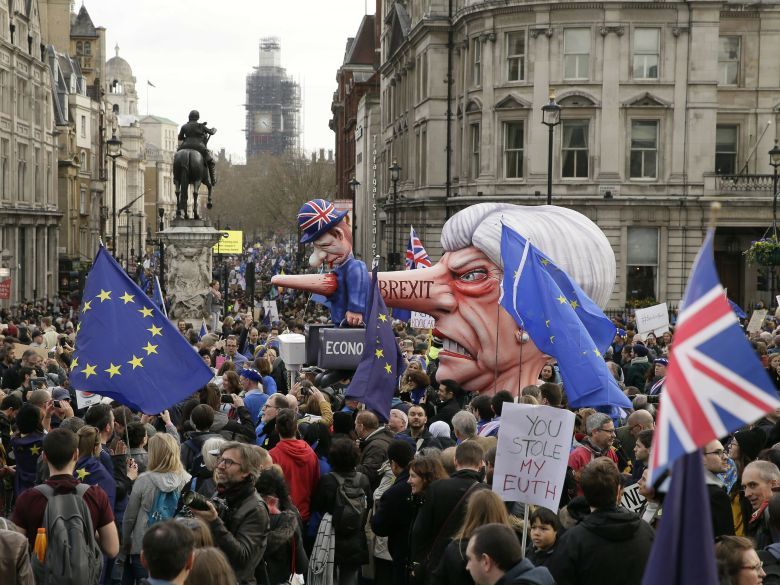
britain_brexit_npost
Image source: National Post

I wanted to write something about Brexit while it’s still timely. The topic has temporarily dropped from the radar but will soon return with a vengeance as the UK approaches a new “cliff edge” in about a year. At the end of this period, a transitional arrangement will end; and if no trade deal has been reached by then, the UK will leave the EU on World Trade Organization terms.  We are often warned the UK must not leave without “a deal,” but this is misleading because WTO terms would represent a perfectly acceptable arrangement.

Brexit is an acronym which stands for Britain’s exit from the European Union. The controversy has given rise to a flurry of such acronyms – Frexit, France’s exit ; Dexit, Germany’s exit; and my personal favorite Czech Out, the exit of the Czech Republic. The EU has a mechanism, called Article 50, which theoretically allows member states to leave; but  like the Hotel California – you can check out; but you must never leave (unless prepared for the clean break). British Prime Minister Theresa May waisted three years negotiating a terrible deal which was worse than membership. It was repeatedly rejected by Parliament despite numerous attempts to ram it through (the rejections were about the only thing Parliament could agree on). May’s spider’s-web agreement spawned yet another acronym, BRINO – Brexit in name only.

The UK has been roughly divided into two camps, consisting of Leavers and Remainers, the latter often referred to as Remoaners, because they only accept democratic outcomes they agree with. They’re also internationalists, claiming the nation state is obsolete and ought to be replaced by a world government run by really smart people who know what’s best (a dictatorship). The first step towards globalization is regionalization and the continent of Europe is a “blueprint” for successive phases.

Needless to say, I am a Leaver (as the title of this blog site would suggest). In another sense I am also a Remainer; supporting a  close trading arrangement and other forms of co-operation which do not compromise national and individual  sovereignty. Indeed, from the beginning, that was always the stated intention of the EU. The idea of a super state was a hidden agenda, waiting to emerge full blown once decades of anti-nation state propaganda had reached fruition. The EU was originally sold to the public as a peace project, an alternative to two world wars. If that’s so, then why the push for a single European military with headquarters on the continent? This planning is now at a very advanced stage.  Apparently, they are  still planning for war but on a much larger scale.  Nationalism is racism, they say, but people who love their own families can live side by side with other families without becoming the Hatfields and the McCoys. It happens all the time – in the real world. Canada has a free trade agreement with the United States and Mexico but no assembly outside Canada has power to legislate for Canadians and we are not subject to the rulings of any foreign court. There were many wars on this continent once, but this is unthinkable now, without the need for political unification. In Europe, the once  hidden imperative for ever closer political union is now explicit and Brexit represents a dagger at the heart of it. If Britain were to remain in the EU, it would have less autonomy than a single state within the United States. There’s a government document in the National Archives which says so.

There are many reasons to be Euroskeptic, but of particular interest to me is the damage done to the UK constitution occasioned by many years of EU membership. This damage has accelerated since the 2016 referendum owing to desperate attempts by well-placed Remainers to subvert the results of the referendum.  This is no small matter. The UK constitution has evolved over the centuries as a defense against tyranny. To allow that constitution to be compromised  in favour of  anti-democratic institutions in Brussels is to put at risk all the protections we take for granted.

First, I will explain some key features of the UK constitution then proceed to describe how EU membership has damaged it, possibly beyond repair.

The central pillar of the UK constitution is the legal sovereignty of Parliament. Parliament may legislate on any subject matter and having legislated, no court or other body may challenge the validity of that legislation. Furthermore, a  unique aspect of the U.K constitution is that of the  convention. Convention  gives the UK model it’s unwritten characteristics. An unwritten constitution works fine until a convention is violated. For example, no law can take effect without royal assent; but by convention, the Queen does not act alone, relying on the advice of her ministers. What happens if she withholds the royal assent, which she is legally entitled to do? The answer – constitutional chaos. To be clear, the Queen has not done this, but other conventions have been broken in desperate attempts by Remain MP’s and a biased Speaker to stop Brexit. The closest thing the UK has to a written constitution is the Bill of Rights 1688. Article 9 of the Act says the freedom of speech and debates and proceedings in Parliament may not be challenged or impeached in any court or place out of Parliament. This clause was inserted because the King would often use the courts to override proceedings in Parliament. This use of the courts to interfere in “proceedings in Parliament” re-emerged during the Brexit battle.   The constitutional battles of the 17th century resulted in a clear delineation of responsibility – a separation and balance of powers. Tyranny occurs when one branch or arm of governance seeks to override another. Since then, the courts have always refused to get involved in political matters. The rule is, Parliament creates laws, the courts enforce them. Until now, the UK courts have been renowned for impartiality. I cannot think of a single example until now when the courts have broken with this convention. Another aspect of the UK constitution is the concept of the royal prerogative. Certain matters are for the executive branch alone and the courts may not interfere except to determine the existence and scope of a prerogative power. Two common prerogatives are the command and disposition of the armed forces and the negotiation of international treaties. Negotiations with Brussels over Brexit is in the latter category.

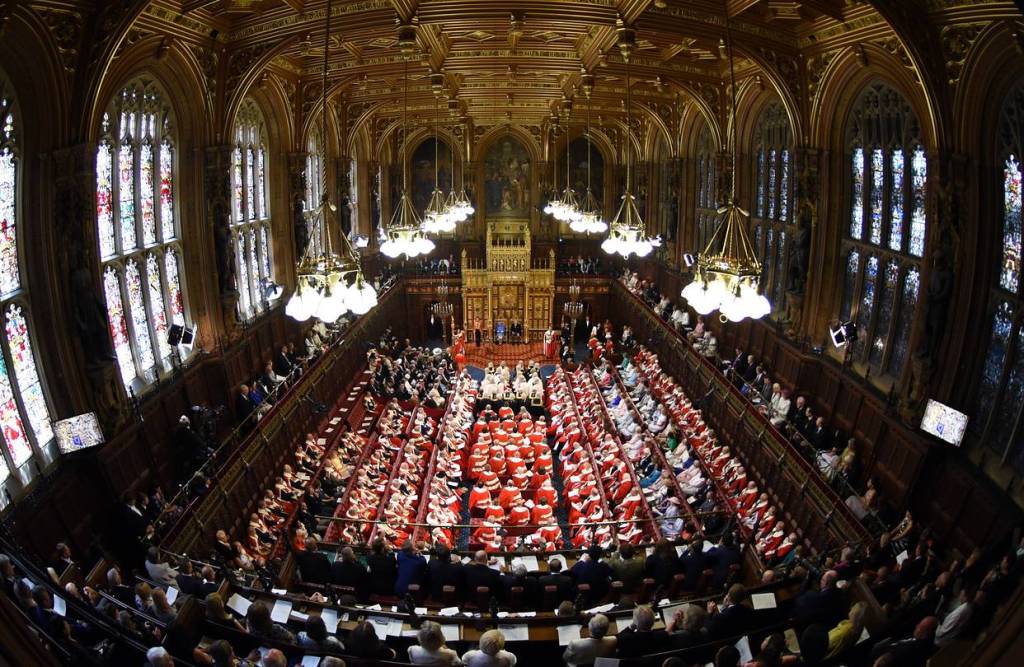
UK parliament
UK Parliament

The UK joined the European Union, or The European  Economic Community as it was then called, in 1973. The Union was “sold” to the public by Ted Heath’s conservative government as a trading relationship. I lived in the UK at that time and I remember it well. In those days, the Labour Party (the socialists) opposed the UK’s application for membership based on the issue of national sovereignty, the same reason I oppose it today. How times have changed! Today it’s the conservatives leading the Leave campaign. Now it’s Labour (although divided) trying to keep us there. Back in the day, Labour’s eloquent spokesman, Anthony Wedgewood Benn, repeatedly warned of the hidden agenda. That was when the Labour Party actually represented working people rather than an effete establishment as it does today. Here’s what he had to say:

Britain’s continuing membership of the Community would mean the end of Britain as a completely self-governing nation and the end of our democratically elected Parliament as the supreme law-making body in the United Kingdom.

Here’s what he said after the passage in Parliament of the European Communities Act 1972 (providing the legal basis for the UK to join the EEC):

It was a coup d’état by a political class who did not believe in popular sovereignty.

The 1972 Act gives legal authority for EU law to have effect as national law in the UK. The 1972 Act also gives EU law supremacy over UK national law. Where the interpretation of EU law is in doubt, the 1972 Act requires UK courts to refer judgment to the European Court of Justice. All primary legislation enacted by the UK Parliament has effect subject to the requirements of EU law. This means that the courts are obliged to strike down legislation which is inconsistent with EU law.  The European Court of Justice (to which the UK is now subject) has since ruled that EU law prevails even over the national constitutions of member states. As always, the devil is in the details.

This is a clear violation of the legal sovereignty of Parliament principle, the very foundation of the UK constitution. It is also a clear violation of the long-standing convention that UK courts do not interfere with Parliament.

An example will serve to illustrate. I refer to the The Factortame case of 1991, which concerned the practice whereby Spanish fishing companies registered their vessels as British and then bought up British fishing licences, allowing them to share UK quotas even though they sailed from and landed their catches in Spanish ports. Parliament passed the Merchant Shipping Act to protect UK quotas. To qualify for British quotas, ships had to be owned and crewed in Britain. A group of Spanish-owned fishing companies headed by Factortame Ltd. brought a legal action claiming, “national discrimination.” The European Court of Justice upheld their claim and the UK ‘s highest court had no choice but to strike down the Act.  Factortame is a clear example of the impotence of Parliament occasioned by EU membership. To add insult to injury the British government had to pay 100 million pounds in compensation to the Spanish companies for the 18 months they had been deprived of fishing rights.

After all my painful experiences with religious and secular fundamentalism, I’ve become deeply suspicious of people with hidden agendas, disguising their true intentions behind a mask of moral and intellectual superiority; especially when I suspect their real motivation is power. Every now and again, they step out from behind the curtain and reveal themselves. Here’s what political economist and diplomat Jean Monnet  (one of the original founding fathers of the EU project, (called “The Father of Europe”) had to say:

Europe’s nations should be guided towards the super state without their people understanding what is happening. This can be accomplished by successive steps, each disguised as having an economic purpose, but which will eventually and irreversibly lead to federation.

Well, he very nearly got us there. Then came Brexit.

The progression from trade arrangement to super state  was recognized in the 2016  Referendum Bill, read in Parliament by then foreign secretary, Philip Hammond (remember that name). He begins, the EU had “changed almost beyond recognition” from what the British had endorsed in the confirmatory referendum in 1975.

He ended: “Whether you favour Britain being in or out, we surely should all be able to agree on the simple principle that the decision over our membership should be taken by the British people. Not by Whitehall bureaucrats; certainly not by Brussels Eurocrats; not even by government ministers or parliamentarians in this chamber. The decision must be for the common sense of the British people . . . For too long, powers have been handed to Brussels over their heads. For too long, their voice on Europe has not been heard. This bill puts that right. It delivers the simple in/out referendum that we promised, and I commend it to the House.”

MPs endorsed his call by the massive margin of 544 votes to 53. Not a single Conservative, Labour or Liberal Democrat MP voted against it (the 53 “no’s” consisted of Scottish National Party MPs). In the most spectacular and emphatic fashion, Parliament had ceded its authority to the public, directly.

That was all well and good when the political establishment were confident that the British people would swallow the Kool Aid. Once the unexpected happened, and the Leavers won the referendum, that same Philip Hammond, who once  lauded the common sense of the British people, he abruptly turned on them, together with 21 Tory rebels,and set upon sabotaging the democratic result.  Phillip Hammond and others were all elected on a clear platform of “no deal is better than a bad deal.” By defying the government and refusing to allow a “no deal exit,”  they were also defying the very people who elected them. Today the legal supremacy of Parliament really means the legal supremacy of the voting public.   Suddenly, the people had no common sense, they did not understand what they were voting for. The simple in or out choice would not suffice after all. It needed to be hedged about by endless reams of qualification calculated to neuter the result.

By denying their own government a working majority, the rebels had also engineered a “hung Parliament.”  Parliament then  passed a law requiring Boris Johnson to seek an extension rather than leave on schedule (on a date already enshrined in law). Boris sought to prorogue (adjourn) Parliament for a period deemed longer than normal. Rather than seek a remedy internal to Parliament itself, the Remainers took him to court. This marked a return to the constitutional battles of the 17th century.  The High Court gave an impeccably correct decision in line with  precedence. It was a political question and not one for the courts. It could be resolved in Parliament by a vote of no confidence or an election. The Remainers lacked the nerve for either alternative, anything but face the verdict of the electorate. Instead they appealed to the Supreme Court, a relatively new court set up by arch Remainer Tony Blair. This is the moment the constitution shattered. The Supreme Court held that the PM’s decision was “unlawful.” This was more of a  political decision than a neutral and impartial one based on precedence. There was a fear that the extra time involved in prorogation would prevent Parliament from extending the deadline thus triggering a “no deal” outcome. The clear rule has always been, the courts do not interfere in political matters. In the end it mattered little how long Parliament was prorogued but the decision has created a constitutional crisis.

The will of the people cannot be suppressed forever, and to drive that point home even more forcefully a subsequent election (on a platform mandating a clean Brexit) returned Boris Johnson with a thumping majority; and as for those 21 Tory rebels, every last one of them failed to be re-elected after being expelled from the party. The way is now clear for a true Brexit, but have those passionate Remainers given up? Not a chance. Their patriotic zeal for a new European super state is undiminished, even as the EU fails miserably on every front. It remains to be seen how much influence the new aristocracy will bring to bear on subsequent developments.

The EU is not a democracy, far from it. Eu law originates as Commission proposals and is enacted by a Council of Ministers. There is a European Parliament but it’s mostly a debating chamber. It‘s role is consultative but real power resides with unelected appointees who receive their instructions from corporate lobbyists, a more direct form of corporate rule. The nation state is regarded by the multinationals as a big nuisance, an obstacle to the free movement of labour, capital, goods and services.  Free movement of people provides cheap labour for big business as well as the nannies, gardeners and servants needed to serve  affluent Londoners. Remainers can barely conceal their contempt for democracy, as do their ideological soulmates in Brussels. The aristocracy of old had a similar contempt for the masses.

Britain has the second largest economy in the EU and the largest military. It is the second largest contributor to the EU budget. Its economy continues to thrive despite all the predictions of “catastrophe” from the Remain camp. Leavers call this “project fear.” “Project fear” is nothing new. When the UK refused to adopt the Euro currency in 1992, there were similar predictions of catastrophe, none of which materialized. The UK imports vast quantities of manufactured goods from the continent, more than it exports which means a free trade agreement will benefit Europe more than the UK. The UK is in a strong negotiating position. Having a close relationship with Europe, trading or otherwise, is a great idea . Political union is unnecessary to achieve these ends.

(C) Adrian Charles Smith 2020

dover cliffs
photo: Plastee/Shutterstock