Sleepwalking to Dystopia with “Eyes Wide Shut”
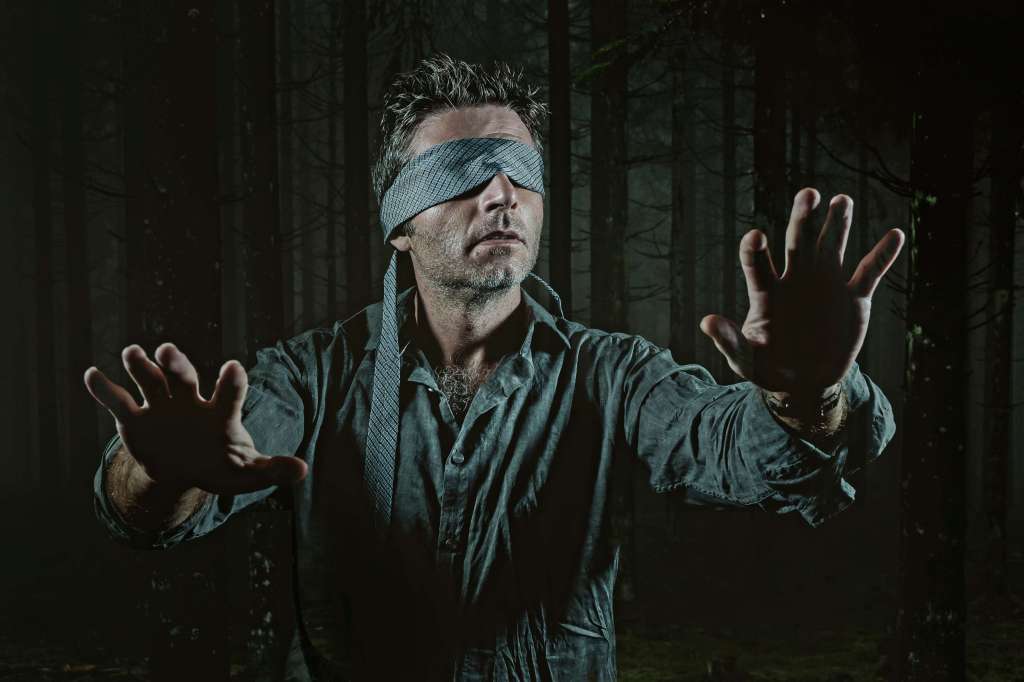
With eyes wide shut we make a conscious choice to stay unaware, even when the situation is clear.

Many sources of information are unreliable, and others tell the truth. Museums, archives, court records, the legislative output of Parliament, these are considered reliable. Hansard is the official record of proceedings in Parliament.  Hansard does not lie, so when Parliament gave two standing ovations to a wanted Nazi war criminal for his “heroic fight” against the Russians in World War 2, the only solution was to erase the whole embarrassing episode from the record. They tried but failed.  Damage to the larger war narrative was not fatal, however – the deeper truth hidden in plain sight.

Hidden in plain sight means hidden but easily discoverable for those who want to know. You won’t learn much from corporate or state media – two horns on the same goat. You can search the record and/or hear different points of view. This is essential to avoid dystopia.

The Canadian “Online Harms Act” (Bill C63) protects us from “harm”, they say. State media reinforces the narrative. A tearful mother is interviewed, recounting her daughter’s suicide when compromising pictures were circulated on the internet.  A distraught black woman complains of racial slurs. A child’s Lego set is regulated, so why not the internet, they say?

Sounds reasonable until you dig deeper.  The harms which the Online Harms Act seeks to address are already prohibited by the Criminal Code of Canada. It’s already an offence to post non-consensual sharing of intimate images or content which incites racial hatred. Nothing new in the Online Harms Act when it comes to actual harm, except  the harm it causes.

So, here’s what’s new but left unreported by a compliant Canadian Broadcasting Corporation. Under the pretense of protecting children, the government would give unprecedented powers to a Canadian Human Rights Commission, a body exempt from the normal rules of evidence. You could be liable to pay $50,000 to the federal government and $20,000 to a “victim” who felt offended or hurt by what you said.  Legal costs are added but the complainant (victim)  pays nothing, whatever the outcome. The tribunal can even prosecute based on an anonymous complaint.

In our common law tradition, representing 1000 years of constitutional evolution, you have a right to know who your accuser is, you have a right to confront your accuser and to question him (her) or have your representative do it for you.  The alleged “victim” was once   called the “complainant”, preserving a  presumption of innocence, but all these things are up ended by the Online Harms Act. Even if found innocent, the process is the punishment.

Denunciation is usually enough for a politicized kangaroo court. This has happened before – the Spanish Inquisition, the Salem witch trials, Stalinist Russia and Hitler’s Germany.  In Hitler’s Germany you could easily dispose of an unwanted spouse by complaining to the police that he insulted Hitler. Denunciation was enough and the accused would disappear forever.

Imagine a new army of deeply offended busybodies filing thousands of complaints, including anonymous ones, against ideological opponents or someone they just don’t like. No need for evidence, only that they were “offended”.  Imagine the chilling effect on free speech.

Being offended is an emotional state, not a rational argument. Emotional states do not operate at the level of objective reality which the law requires for the protection of all.

Similar legislation and procedure is rolling out across the anglosphere. According to The Times of London, 30 people are arrested every day for offensive online comments. In these cases, the complainant is always referred to as the “victim”. From The UK College of Police, “the perception of the victim is the defining factor——. The victim does not have to justify or provide evidence of their belief, and police officers or staff should not directly challenge this perception.” Denunciation is enough.

But it gets worse. By mending Section 810.012 of the Criminal Code, judges will have the power to violate the liberty of Canadians based on what they might say in the future. We have officially entered the dystopian sci fi world of P.K. Dick,  who describes a fictitious “Department of Pre-Crime” in his sci fi short story “The Minority Report”, which was also made into a feature film, Minority Report.

For the world management team, perception management is everything. There is no truth, only narrative. Psychiatrist Scott Peck describes these imposters in his book People of The Lie: The Hope for Healing Human Evil.  They may own all the channels of communication, yet truth is discoverable, albeit disturbing. The black magic spell is reinforced by participating in a lie. Whatever we can face will break the spell.

(C) Adrian Charles Smith, 2025

Trudeau’s Invocation of Emergency Act: “Unconstitutional, Illegal and Unreasonable”

Further to my presentations on Canada’s truckers’ protest, delivered at The Glastonbury Symposium and on Aeon Byte, there has been an important new development. The Federal Court of Canada has just decided that Trudeau’s invocation of the Emergencies Act 1988, was unconstitutional, illegal and unreasonable.

This contrasts with the prior determination of Justice Paul Rouleau, Chairman of The Public Order Emergencies Commission, a public inquiry into the circumstances leading up to invocation of the EA and subsequent freezing of bank accounts and martial law responses.

The important distinction here is that Justice Rouleau was a political appointee charged with rendering an “opinion” at the end of the inquiry. Justice Rouleau’s “opinion” was that the very high standards of the EA were met. In his remarks, Justice Rouleau emphasized that his “opinion” did not have the force of law and that a final determination was a matter for the courts. This recent decision of the Federal Court, on the other hand, does have the force of law and of legal precedence, opening the way for further lawsuits against the government by all those harmed by invocation.

In his remarks more than a year ago, Justice Rouleau also stated that he arrived at his “opinion” reluctantly as it was “not strongly supported by the facts” and that a reasonable person, properly informed, could easily reach a different conclusion. A compliant media dutifully reported the headline “opinion” without reporting his follow-on remarks, so the government appeared to be in the clear; that is, until now.

If granted leave to appeal, the Trudeau Government will go to the Supreme Court, but government lawyers will have a very steep hill to climb.

Having followed this protest closely for over two years, I now believe we have two different legal systems at odds with each other — one based on established principles and the other clearly politicized. The latter is prepared to ignore “facts” or redefine language to support government policy.

It has been accepted for centuries that a “balance and separation of powers”  is the basis of a free society. No one organ of governance (legislative, judicial, executive) should be allowed to dominate the others. In our system, even the police exercise an independent authority.  So, when judges make decisions which ignore facts to protect the powerful, we are in grave danger.

“Facts,” said, John Adams, “are stubborn things.” It has been two years now since the protest but those stubborn facts, though suppressed, have not gone away.

We stand on the precipice but have stepped back from the edge, at least for now.

(c) Adrian Charles Smith, 2024

Second Interview with Aeon Byte Gnostic Radio

My interview with Miguel Connor of Aeon Byte Gnostic Radio, home of the virtual Alexandria (see recommended section). This is a doubleheader with Sean Stone, son of filmmaker Oliver Stone, well known for such classic films as JFK and Born on The Fourth of July. We discuss Sean’s latest documentary, Best Kept Secret, a powerful expose, speaking truth to power. I have included a link to the documentary in the Media Section.

The interview continues, examining those forces which control our “reality”.

Video used with permission from Miguel Connor.

(c) Adrian Charles Smith 2022

Our State of Emergency

Shutterstock

In a national emergency, such as war, disease or natural disaster, the executive branch of government  may temporarily suspend civil liberties to ensure the public safety. During such periods, the executive branch governs by decree but their decrees are not law and are reviewable by the courts. It is only the enabling legislation which should be considered as law. For example, the Emergency Powers Act 1920 was an Act of the Parliament of the United Kingdom, which allowed the Sovereign power, in certain circumstances, to declare a state of emergency by proclamation. The Act does not give the State a license to drive a coach and horses through the national constitution. A government, may not, for example, declare a state of emergency for reasons which are trivial or nonsensical, effectively imposing  a dictatorship by the back door.

Both the declaration of a state of emergency and subsequent decrees are reviewable by the courts. It must first be demonstrated that a genuine emergency exists. Secondly, it must be shown that the decrees ameliorate that emergency. Courts do not censor voices of dissent, as is common in politics or the media; but rather, hear arguments strictly on their merits with no weight assigned to denunciation or ad hominem attacks.

The Wednesbury principle, based on a UK Court of Appeal decision in 1948, allows for judicial review of administrative action, applying a “reasonableness test” to the decisions of authorities exercising power conferred by an Act of Parliament. Decrees, prohibitions, or mandates which defy logic, or which violate generally accepted moral standards, may be struck down.

The concept of “natural law” requires that law must have a foundation in morality to be deemed legitimate. Otherwise, it’s only force — the orders of the mafia boss shouting, Fetch me a beer. Under natural law, we are under no obligation to obey an immoral law or even to consider it as law at all.

By contrast, the philosophy of “legal positivism” conceives of law as the “command of the sovereign”, issuing orders backed by threats. There is a disturbing tendency to regard orders backed by threats as legitimate law, as though authority is beyond scrutiny, to be obeyed without question.

These two competing concepts define the issue — what is law? Is it morality or is it force?  The answer is found through observation of how the law operates, not what we think it ought to be, or how we wish it would be; but what is it?  

An example will serve to illustrate.

In Nazi Germany, a statute made it illegal and punishable by death, to make insulting remarks about Hitler. This was used by some Germans to dispose of unwanted spouses by reporting them to the police. After the war, informants were prosecuted, even though under Nazi law, the defendants were solid citizens performing their civic duty by snitching on offenders. In one such case, the German Court of Appeal found a woman guilty of the offence of deprivation of liberty, because — quoting from the judgment — the statutes were “contrary to the sound conscience and sense of justice of all decent human beings.” In other words, Nazi law was not law because it lacked any character as law being devoid of moral legitimacy.

The positivists objected. Hitler was sovereign and law is, “the command of the sovereign”. They also objected to the Nuremberg trials which followed because, in their view, there was no “sovereign”. Neither is international law considered law, and constitutional law is nothing more than “positive morality” (a morality which is posited or put forward).

In answering the question, clearly morality is embedded in our concept of law because in practice it is observable in the operation of the courts. The Nuremberg trials proceeded, despite the objections of the positivists, and offenders were hanged, including Nazi doctors who imposed medical experiments on people without their informed consent. The trials gave rise to Nuremberg 2, an international agreement upholding that same principle of informed consent, and this has been accepted in all civilized nations to this day.

It would take something truly extraordinary to require an abandonment of that principle. Many professionals have lost their jobs because of “mandates”, and many have succumbed to pressure in order to keep their jobs. But consent to an experimental gene therapy, pushed by companies with a history of criminal behaviour, through media outlets which they control, requires an absence of pressure; because, in law, consent given under duress is not consent.

Does a disease which has a mortality rate of less than 1% and for which the average age of death is 82 justify locking down whole populations and crashing the global economy? The lockdown response amounts to a quarantine of entire healthy populations. An alternative approach would be to quarantine only the sick and most vulnerable.

If someone in power confines you to your own home, under normal circumstances that would amount to the crime of “false imprisonment” and the persons responsible could be held liable without clear and convincing evidence that this was necessary to address an alleged emergency. It’s interesting to me that what some call “the law” may in fact be a crime, as the Nazi informer cases illustrate.

For those worried about the disease, the answer for them is clear — get the injection(s). You are now safe and protected, 92% was the claim. Those who do not take the injection(s) have voluntarily undertaken the risk and that is their business and no one else’s. The assertion that the “protected” need protection form the “unprotected” is that very kind of reasoning which the Wednesbury principle addresses — a proposition so unreasonable “that no sensible person who had applied his mind to it could have arrived at it”.

These and other related questions will now be brought before the International Criminal Court in The Hague. The victims, on behalf of whom the complaint was filed, are “the peoples of the United Kingdom.” One of the seven applicants is Dr. Michael Yeadon, a former vice president and chief scientist of allergy and respiratory research at Pfizer.

One man who understood the concept of “natural law” was Sir Thomas More, the King’s Chancellor during the reign of King  Henry VIII. A man called Ritchie Rich was about to denounce Sir Thomas. Friends and family pleaded with Sir Thomas to have him arrested, something he had within his power. But Sir Thomas refused because Rich had broken no law, although he was about to — the crime of perjury. Sir Thomas was a moral man and for him the law was rooted in morality and conscience, and this, he believed, was our only defense against tyranny. In Robert Bolt’s play, “A Man for All Seasons”, Sir Thomas rebukes his friend Roper for urging him to “cut a great road through the law to get at the devil — and when the last law was down and the devil turns round on you where will you stand, Roper, the laws all being flat”.

Do we now cut a great road through the law to get at the devil, the devil being a global sickness. In the words of Sir Thomas, “I would give the devil benefit of law for my own safety’s sake”.

(C) Adrian Charles Smith 2022